 Brand Strategy & Design
Brand strategy vs marketing strategy: why you need both
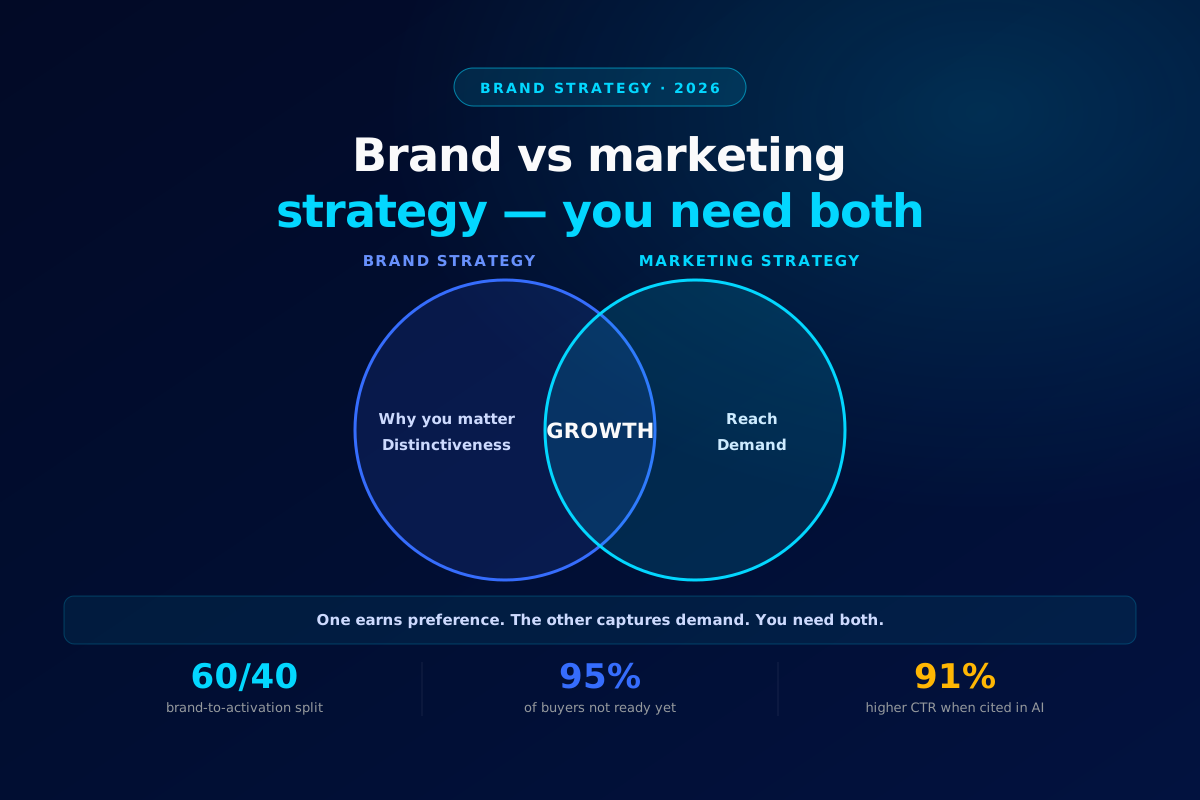
Marketing captures the demand that exists today. Brand builds the demand you'll capture tomorrow. Confuse the two — or fund only one — and growth quietly stalls. Here's the difference, and why the businesses pulling ahead run both as a single system.
"Brand strategy" and "marketing strategy" get used as if they were the same job. They aren't. One decides what you stand for and why anyone should care; the other decides how you turn that into demand this quarter. Skip the first and every campaign works harder for less. Skip the second and a brilliant brand never converts. The evidence for balancing both has only sharpened in the past year.
31%of marketing budgets went to brand in 2024 — down from 40%
95%of B2B buyers are not in-market right now
60/40brand-to-activation split proven to maximise growth
Budgets have swung the wrong way
Share of marketing spend, brand vs short-term performance
The distinction
Two jobs, one growth engine
They operate on different timelines and answer different questions. Line them up side by side and the overlap — and the gap — become obvious.
DimensionBrand strategyMarketing strategy
Question
Why do we exist & what do we stand for?
How do we sell it, to whom, right now?
Horizon
Long-term — years of equity
Short-term — this campaign, this quarter
Output
Positioning, promise, identity, story
Channels, campaigns, offers, budgets
Measured by
Awareness, preference, pricing power
Leads, CAC, conversion, ROAS
When it wins
Buyer enters the market already leaning your way
Buyer is ready today and you're the easy yes
The 95-5 rule makes the case plainly. At any moment only about 5% of your buyers are ready to purchase. Marketing wins that 5%. Brand is what earns you the other 95% before they ever raise their hand — so when they do, you're the name they already trust.
Why both, why now
Neither one works alone
Fund only performance and you rent demand at rising prices — customer acquisition costs across DTC climbed 25–40% over five years, and every AI-driven search shift squeezes paid clicks further. Fund only brand and you build recognition with no mechanism to convert it. In 2026, generative search raised the stakes on both: brands cited in AI Overviews saw 35% higher organic and 91% higher paid click-through than uncited rivals — and it's brand authority that gets you cited. The two now feed each other directly.
Get moving
Where to start
Your situationStart withWhy
Ads work but margins are thin
Brand positioning
Cuts CAC by pre-warming demand
Known but not converting
Marketing & offers
Turns awareness into pipeline
Blending into competitors
Brand differentiation
"Sameness" is 2026's biggest risk
Scaling & funded
The 60/40 split
Balances future demand with today's
Brand and marketing aren't a budget you choose between — they're two settings on the same dial. Set the ratio to your stage, then keep both running.
Where Glyde fits
Strategy and execution, under one roof
Most agencies do one or the other — a brand studio that hands you a logo, or a performance shop that burns budget on demand that isn't there yet. At Glyde, positioning and performance are the same conversation. We define what you stand for, then build the website, content, and campaigns that turn it into measurable growth.
The Glyde Growth Framework
01
PositionBrand strategy02
DesignVisual identity03
BuildWebsite & assets04
MarketSEO · Ads · Social05
ScaleSustainable growthBuilding on one without the other?
Glyde aligns your brand strategy and marketing engine so every campaign compounds instead of restarting.
Get a brand & growth audit →Sources & references