 Growth Marketing
Building a content engine that generates leads
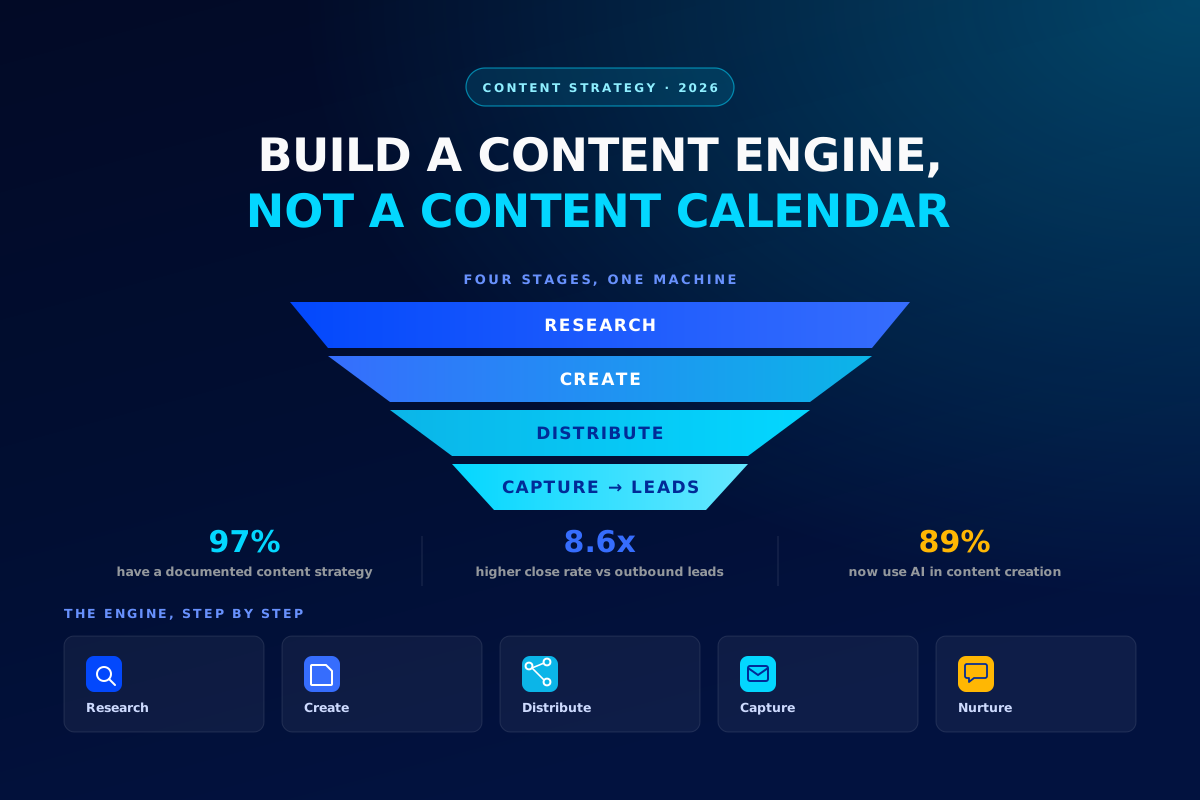
Publishing more content isn't a strategy — it's a symptom of not having one. The teams turning content into pipeline treat it like a connected machine with four moving parts, not a calendar with a wish list attached.
Most B2B teams already know they need content. Fewer have built anything that behaves like an engine — a system where research feeds creation, creation feeds distribution, and distribution feeds a capture flow sales can actually work. According to the Content Marketing Institute's 2026 B2B benchmark research, 97% of B2B marketers now have a documented content strategy, yet only 59% call their program effective. The gap isn't effort. It's architecture — content built without a clear route back to a qualified lead.
97%of B2B marketers have a documented content strategy
8.6xhigher close rate for content-driven leads vs outbound
89%now use AI somewhere in their content creation
Content-driven leads close far more often than outbound
Close rate by lead source
The system
Four stages, one machine
A content engine has four moving parts: research, creation, distribution, and capture. Skip any one and the machine stalls — brilliant articles with no distribution plan, strong traffic with no capture mechanism, or a form that asks for everything and converts nothing. The fix isn't more content. It's tighter connections between the stages you already run.
01The connected build
1
Start with a brief, not a blank page
Every asset begins from real keyword and buyer-question research, not a topic guess.
2
Create once, publish as five formats
One core asset becomes an article, an email, a carousel, and a short-form clip.
3
Route every asset into a lead-capture flow
Distribution and the CRM stay connected, so a read becomes a tracked, nurturable contact.
HubSpot
Zapier
Where teams lose the most ground is the handoff between traffic and pipeline. Buyers now complete 60–70% of their research before they ever speak to a sales rep, using whatever content they find to shortlist vendors long before a demo gets booked. If that content doesn't route into a nurture sequence — and if the form asking for an email address runs five fields long — the engine leaks leads it already earned.
Build your engine
Where to start
Your situationStart withWhy
No documented strategy yet
Write a one-page brief system
97% of active programs run on one
Publishing but no leads
Add gated guides & comparisons
Convert far better than blog posts alone
Traffic there, forms stall
Cut forms from five fields to two
Fewer fields, materially more submits
Manual and inconsistent
Automate distribution + nurture
Protects the touchpoints a buyer needs to convert
None of this needs a content team of twenty. It needs sequencing: earn trust with the right format, build the distribution habit, and treat lead capture as a design problem — not an afterthought.
Where Glyde fits
We build the engine, not just the articles
Content marketing isn't underperforming because the channel is saturated. It's underperforming because most programs are built as a publishing habit, not a lead-generation system. At Glyde, we design the research-to-capture pipeline as one connected build, so the same content budget starts producing a different number: not just traffic, but qualified pipeline.
The Glyde Growth Framework
01
PositionBrand strategy02
DesignVisual identity03
BuildWebsite & assets04
MarketSEO · Ads · Social05
ScaleSustainable growthWant a content engine, not just a content calendar?
Glyde designs the research, distribution, and capture system that turns your content budget into pipeline.
Get a content audit →