 App Development & AI Automation
The complete guide to AI workflow automation for SMEs
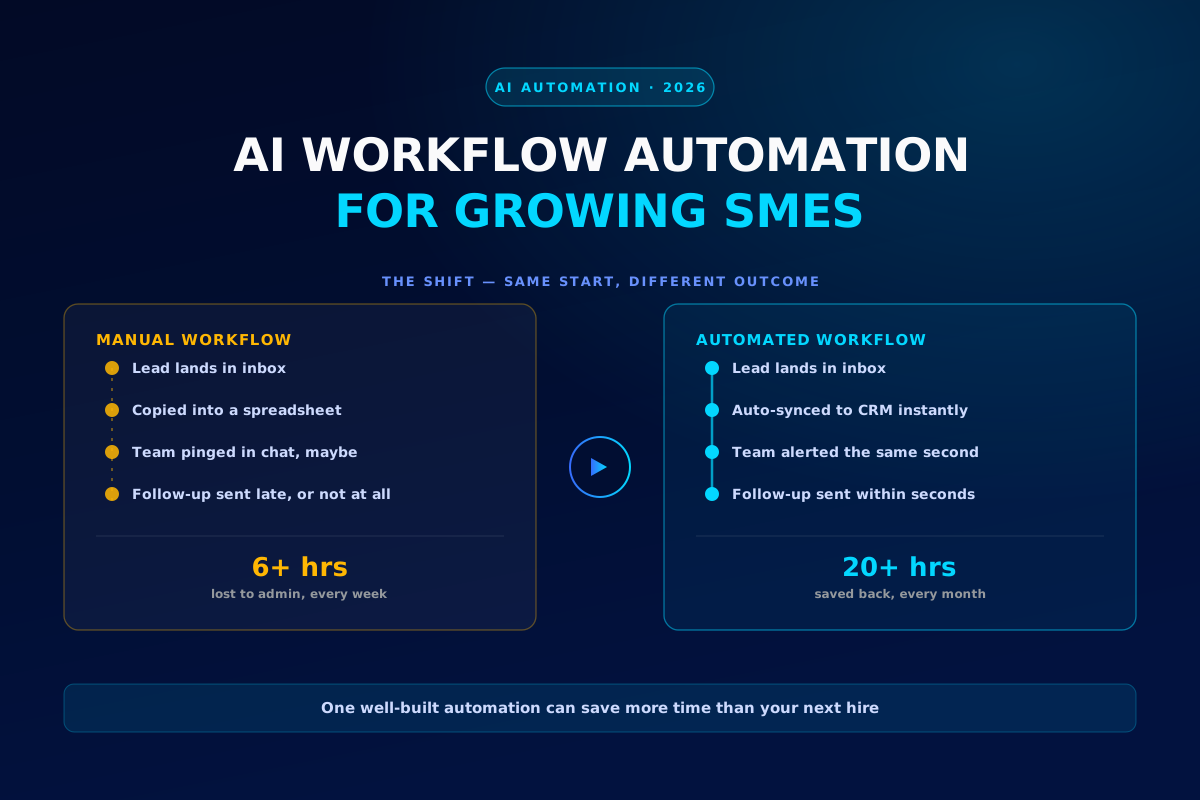
Workflow automation went from a nice-to-have to the default operating model for SMEs in 2025. This guide breaks down what to automate first, the three-step build process that actually works, and the numbers behind the decision.
Most small and mid-sized businesses don't have an automation problem — they have a prioritisation problem. There are dozens of workflows worth automating and only so many hours in the week to do it. The businesses pulling ahead in 2026 aren't running the most tools; they're the ones that mapped their single highest-friction workflow, automated it end-to-end, and reinvested the time back into the next one.
68%of 10–100 employee businesses now use AI, up from 47% a year earlier
91%of AI-using SMBs report a direct revenue lift
$7.5ksaved annually per business from workflow automation, on average
SME generative AI adoption is compounding, not plateauing
% of US small businesses using generative AI
The framework
Automation is a process, not a purchase
Buying a tool isn't the same as building a workflow. The businesses getting real ROI follow the same three-step build every time — map the workflow, wire the trigger-to-action layer, then monitor before adding the next one.
01The three-step build
1
Map before you automate
Write down every step, decision point and handoff in the workflow first. Most "automation failures" are really unmapped workflows wearing a new tool.
2
Automate the trigger-to-action layer
Connect the systems that already hold your data so one event fires the next step automatically — no manual hand-off in between.
Zapier
n8n
3
Monitor, then refine
Track exceptions and error rates weekly for the first month. The goal is a workflow nobody has to think about again.
Build your stack
Where to start, by situation
Your situationStart withWhy
Manual data entry eating hours
Trigger-based sync
Immediate time recovered, minimal risk
Inconsistent lead follow-up
Response & CRM automation
Captures revenue before a competitor does
Scaling without adding headcount
Approval & reporting workflows
Keeps ops tight as volume grows
Too many disconnected tools
A central orchestration layer
One source of truth, fewer errors
Automation compounds. The SMEs seeing the biggest gains aren't running more tools — they're running the same few tools against a workflow that used to eat their week.
Where Glyde fits
We design the workflow, not just the automation
Off-the-shelf automation templates rarely survive contact with a real business — real workflows have exceptions, approvals and edge cases templates don't cover. At Glyde, automation is built as part of the same system as your brand, website and growth marketing, so every workflow ties back to a measurable outcome, not just a saved click.
The Glyde Growth Framework
01
PositionBrand strategy02
DesignVisual identity03
BuildWebsite & assets04
MarketSEO · Ads · Social05
ScaleSustainable growthReady to build a workflow that runs itself?
Glyde audits your operations and designs the automation stack that fits your business — not a generic template.
Get an automation audit →