 E-Commerce Operations
How to improve product listings for your e-commerce channels?
Most sellers treat product listings as a one-time data entry task: write a title, upload some photos, set a price, done. The brands that win on these platforms treat listings as living conversion assets — tested, refined, and rebuilt around what each platform's algorithm and shopper actually respond to.
The catch: Shopify, Shopee, and Lazada are not the same game. Optimising for one doesn't automatically optimise for the others.
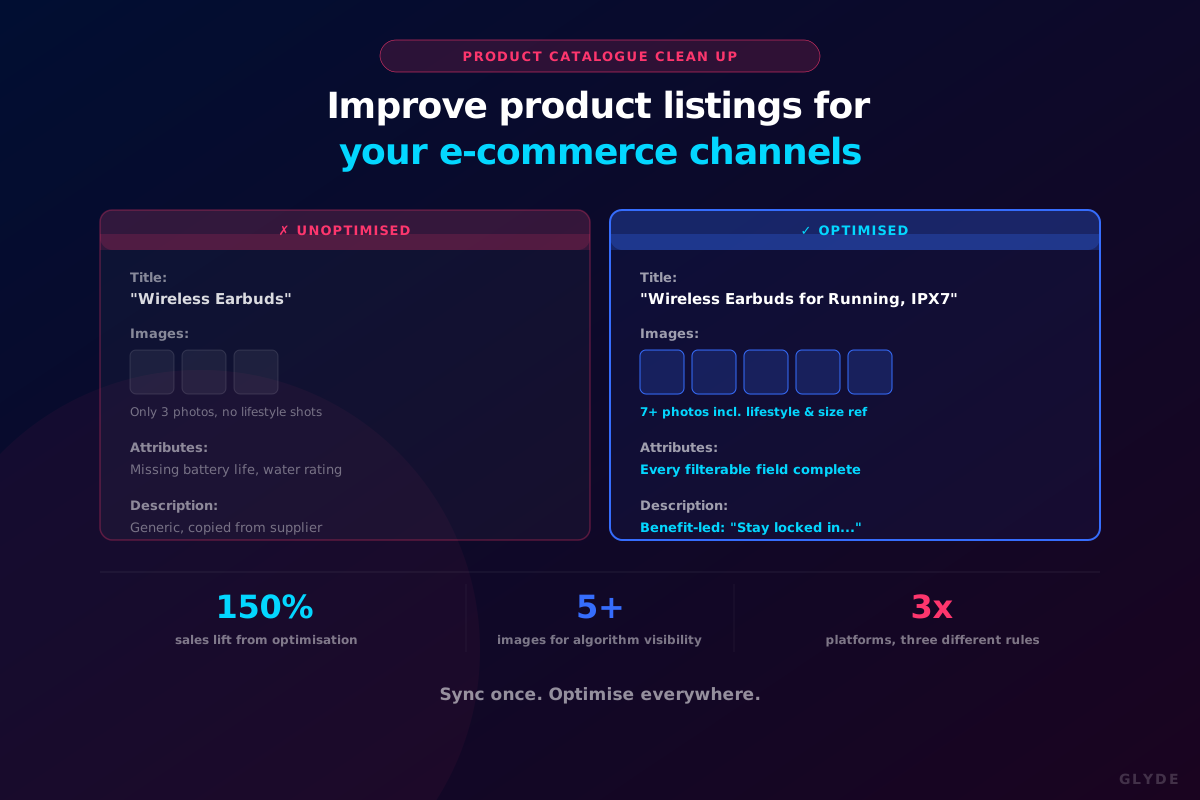
150%Sales lift from full listing optimisation (case study)
5+Images required for Shopee algorithm visibility
800pxMinimum image resolution on Shopee
Same product, different rules
How each platform actually ranks listings
Shopee and Lazada are search-based marketplaces — your listing has to win the search bar first, and convert second. Shopify is different: you control the entire funnel, so your "search" competitor is Google, not other sellers on the same page.
| Platform | What it rewards |
|---|---|
| Shopee | Keyword-matched titles, image quality, engagement metrics (clicks, chat response rate) |
| Lazada | Correct category placement, complete attribute fields, "Brand, Model, Attribute" title format |
| Shopify | SEO-optimised product pages, structured data, page speed, and your own content/ad funnel |
The fundamentals
Five things every listing needs
- Keyword-rich title with the format: Brand + Model + Key Attribute (e.g. "Apple iPhone 8 64GB Silver")
- 5+ professional images, minimum 800×800px, including lifestyle/usage shots
- Complete attribute fields — every filter a shopper might use to narrow results
- Benefit-led description, not just specs — what problem does this solve?
- Competitive, data-checked pricing against similar listings on the same platform
A Shopee smartwatch listing with incomplete descriptions and no targeted keywords sat invisible despite competitive pricing. The product wasn't the problem — the listing was.
Real-world comparison
Optimised vs unoptimised
Unoptimised listing
Generic, incomplete
- Vague title: "Wireless Earbuds"
- 3 product photos, no lifestyle shots
- Missing key attributes (battery life, water rating)
- Generic description copied from supplier
Optimised listing
Specific, complete
- Specific title: "Wireless Earbuds for Running, IPX7 Waterproof"
- 7+ images including in-use and size reference
- Every attribute field filled — filterable by shoppers
- Benefit-led copy: "Stay locked in through your hardest workout"
Don't duplicate the work
Sync once, list everywhere
If you're managing Shopify, Shopee, and Lazada separately, you're manually re-entering the same product data three times — and the version that gets updated last is usually the one that goes stale. A Product Information Management (PIM) layer or sync tool keeps titles, images, prices, and stock consistent across every channel from a single source of truth.
Every hour spent manually re-uploading listings is an hour not spent on what actually moves sales: testing titles, refreshing images, and reading what the data says. Sync your catalogue once. Optimise everywhere.
Where Glyde fits
Listings are part of the growth system
At Glyde, our E-Commerce Operations team treats listing optimisation as an ongoing discipline, not a launch-day checklist. We audit titles, images, and attributes against what's actually converting on each platform — then build the sync infrastructure so updates happen once, everywhere.
The Glyde Growth Framework
01
PositionBrand strategy02
DesignVisual identity03
BuildWebsite & assets04
MarketSEO · Ads · Social05
ScaleSustainable growthWant your listings audited?
Glyde reviews and optimises product listings across Shopify, Shopee, and Lazada — and builds the sync layer to keep them consistent.
Get a listing audit →Sources & references
- Optimizing Shopee & Lazada Listings 2025 — Commerceplus.asia (Jun 2025)
- How to Optimise Product Listings on Lazada — J&T Express SG
- Shopee Product Listing Process 2025 — Alibaba SmartBuy (Jun 2025)
- Top 4 Strategies to Boost Lazada & Shopee Sales — Sellercraft (Dec 2025)
- Boost Lazada Sales with PIM — CLEARomni (Jan 2026)
Explore our E-Commerce & Marketplace Operations service →