 Growth Marketing
How to rank in Google's AI Overviews
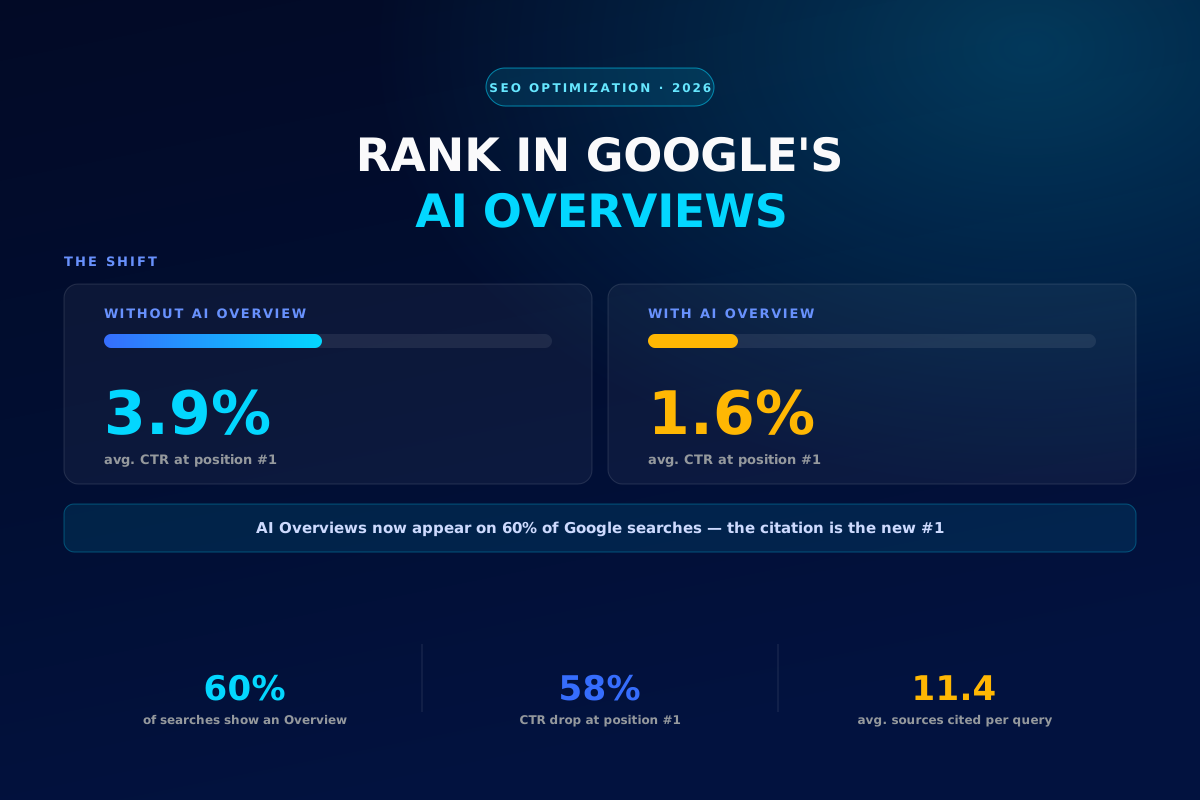
AI Overviews now sit on top of six in ten US searches — and they reward a different kind of page than classic rank-one SEO. Here's what the newest 2026 data says actually earns the citation, and how to structure content to win it.
For a decade, "ranking" meant a blue link in position one. That's no longer the finish line. Google now synthesises an answer above the results, and if your page isn't one of the sources it cites, you can rank first and still lose the click. The businesses adapting fastest aren't chasing position — they're treating the AI Overview citation as its own measurable channel.
60%of U.S. searches now show an AI Overview
58%CTR drop for #1 organic results when one appears
20.4%of first-citation slots claimed by Reddit alone
The pain is sharpest exactly where you'd expect it to hurt least — the top of the page. The higher you'd normally rank, the more an AI Overview now costs you in clicks.
Click-through rate drop by ranking position
% CTR decline when an AI Overview appears, by organic position
The data
What actually earns a citation
Three independent 2026 studies converge on an uncomfortable finding: the tactics that built classic SEO authority aren't the ones AI Overviews reward. Long, "ultimate guide" content, FAQ schema, and heavy author-bio pages under-perform relative to their organic rankings. What wins instead is structural — content built to be lifted cleanly into a synthesised answer.
01Structure for extraction
1
Answer in the first 40–60 words
Lead every section with a direct, self-contained answer the model can lift verbatim — save nuance and context for after.
2
Match length to intent, not habit
Definitional queries win under 250 words; how-to and comparison content wins at 1,000–2,000 words. Skip the 5,000-word guide.
3
Target the highest-trigger intents
Definitional, how-to, and comparison queries trigger an Overview 95–98% of the time; competitive head terms trigger 30x less often.
02Build citation-worthy signals
4
Widen your source footprint
AI Overviews cite a mean of 11.4 sources per query — being one of many credible sources matters more than being the single best answer.
5
Earn a presence in real discussion
Reddit alone captures over a fifth of first-citation slots. Genuine community mentions now function like a ranking signal.
6
Link out, not just up
Cited pages average more outbound links to authoritative sources — it signals verifiable, well-sourced content, not just confident copy.
Prioritise
Where to start
Your situationStart withWhy
You publish long evergreen guides
Split into short-answer + deep-dive
Bimodal length wins, not the middle
You rely on FAQ/HowTo schema
Rewrite the visible copy first
Schema alone underperforms ~10x
You have no community presence
Seed genuine forum discussion
UGC platforms dominate citations
You don't track AI visibility yet
Add an AI-Overview tracker
You can't optimise what you can't see
Being cited beats being ranked. Optimise the page for the fifty words Google will actually quote, then let classic SEO carry the rest of the click.
Measure it
Track what you can't see on the SERP
Most rank trackers still report classic position only. Add AI-visibility tracking to your stack so you can see which pages get cited, which get skipped, and why — before a whole quarter's content plan gets built on stale assumptions.
Semrush
Ahrefs
Where Glyde fits
We build content to be quoted, not just crawled
Ranking algorithms and answer engines now run in parallel, and most sites are only built for one of them. At Glyde, we structure and write content so it earns both the click and the citation — as part of the same SEO engagement, not a separate line item.
The Glyde Growth Framework
01
PositionBrand strategy02
DesignVisual identity03
BuildWebsite & assets04
MarketSEO · Ads · Social05
ScaleSustainable growthWant to be the source Google quotes?
Glyde builds SEO content and structured pages designed to earn AI Overview citations, not just rankings.
Get an AI-visibility audit →