 Growth Marketing
SEO vs Paid Ads: what should growing businesses prioritise?
Because ads are fast, and SEO isn't. That's the entire debate, distilled. Every other consideration — cost, sustainability, trust — flows from that one trade-off: speed versus compounding.
The honest answer for most growing businesses isn't "pick one." It's understanding the timeline each channel runs on, and sequencing your budget accordingly.
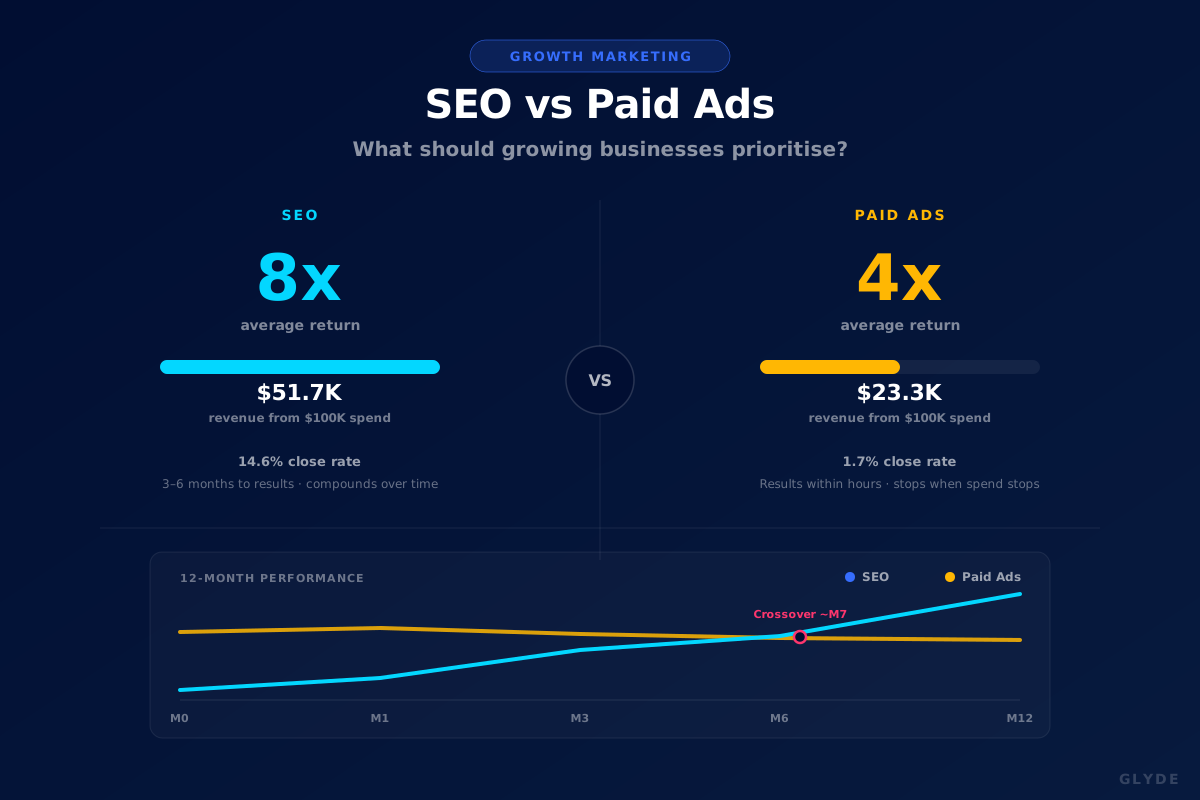
8xAverage SEO return vs comparable spend
4xAverage paid ads return (PPC)
14.6%SEO lead close rate vs 1.7% outbound
The ROI gap
$100K budget, two very different outcomes
For a $100,000 annual digital marketing budget, SEO generates approximately $51,724 in revenue versus $23,275 from PPC — over twice the return from the same spend. The catch is patience: SEO needs 3–6+ months to show meaningful traction, while paid ads deliver visibility within hours.
SEO revenue
$51.7K
from $100K spend
Paid ads revenue
$23.3K
from $100K spend
The 12-month arc
Where each channel sits on the timeline
SEO — compounding return
Paid Ads — flat, stops when spend stops
Most businesses reach SEO break-even around month seven and see strong positive ROI by month twelve. Once it compounds, the cost per lead keeps falling — paid ads never do that.
How to choose
The decision guide
Your situationPrioritiseWhy
Less than 6 months runway, need revenue validation now
Paid Ads
Speed matters more than efficiency at this stage
Launching a product or running a seasonal campaign
Paid Ads
Immediate push, with SEO building quietly underneath
Building a brand for the next 3+ years
SEO
Compounding starts sooner — the asset you still own later
Stable cash flow, 12+ month horizon
70/30 Split
70% primary objective, 30% supporting channel
Don't choose — sequence
The hybrid model wins long-term
Renting versus owning is the right mental model. Paid ads are rented visibility — the moment you stop paying, it disappears. SEO is owned digital real estate — it keeps performing even when you're not actively spending. The smartest businesses use paid ads to validate channels and generate cash early, then systematically shift budget toward SEO as it compounds.
Google Ads CPC rose 18–25% year-on-year in competitive sectors. The cost of renting attention keeps climbing. The cost of owning it doesn't.
Where Glyde fits
We build both — sequenced correctly
The mistake we see most often is businesses treating SEO and paid ads as competing budgets instead of a coordinated system. At Glyde, we sequence them deliberately — paid ads for early traction and keyword intelligence, SEO content built on what's actually converting, so the two channels strengthen each other instead of competing for the same line item.
The Glyde Growth Framework
01
PositionBrand strategy02
DesignVisual identity03
BuildWebsite & assets04
MarketSEO · Ads · Social05
ScaleSustainable growthNot sure how to split your budget?
Glyde builds sequenced SEO and paid ads strategies based on your runway, stage, and growth goals.
Talk to our team →Sources & references
- SEO vs Paid Ads: Which Gives Better ROI — Single Grain (Feb 2026)
- 113 Digital Marketing Statistics for 2026 — SeoProfy (May 2026)
- SEO vs Paid Advertising ROI: 1, 6, 12 Month Comparison — Purge Digital (Nov 2025)
- SEO vs Paid Ads: Which Channel Delivers Better ROI — Web India Inc (Apr 2026)
- Average ROI from SEO vs Paid Ads — CI Web Group (2025)
Explore our Growth Marketing service →