 Brand Strategy & Design
Brand Positioning in 5 Steps
Most businesses can explain what they do. Far fewer can explain why customers should choose them. That's the difference between having a business and having a brand.
When your positioning is unclear, marketing becomes expensive. Your website struggles to convert. Your social media feels inconsistent. Your sales team repeats the same explanations over and over again.
Strong brand positioning solves this. It creates clarity for your team, confidence for your customers, and a foundation for every future marketing effort.
Whether you're launching a startup, rebranding an existing business, or preparing to invest in a new website — here's a practical framework for defining your brand positioning.
What it is
What is brand positioning?
Brand positioning is how you want customers to perceive your business relative to alternatives. It's not your logo. It's not your colour palette. It's not your tagline. It's the unique space you occupy in your customer's mind.
Good positioning helps customers instantly understand:
- Who you serve
- What problem you solve
- Why you're different
- Why they should trust you
The strongest brands aren't necessarily the loudest. They're often the clearest.
The 5-step framework
How to define your positioning
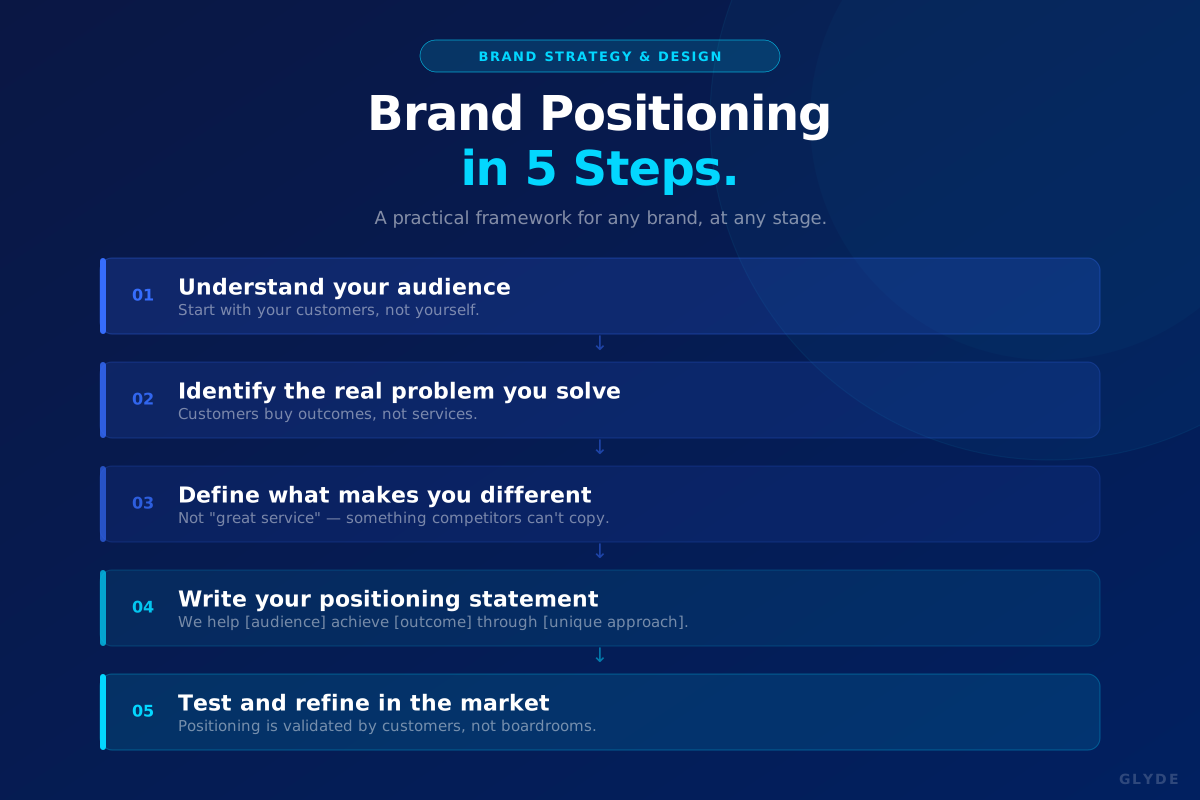
Follow these five steps in order. Each one builds on the last — skipping ahead produces positioning that sounds right but doesn't hold under pressure.
01
Understand your audience
Start with your customers, not yourself. Identify who your ideal customer is, what challenges they face, what motivates their decisions, and what outcomes they want. Avoid broad audiences — the more specific your audience, the stronger your positioning becomes.
02
Identify the real problem you solve
Customers don't buy services — they buy outcomes. A business might sell branding or web development, but customers are usually buying growth, credibility, or competitive advantage. Ask: what problem would still exist if our company disappeared tomorrow?
03
Define what makes you different
Most brands claim quality, great service, and experienced teams. Everyone says the same thing. Effective differentiation comes from identifying something competitors cannot easily replicate — a unique methodology, geographic expertise, or an integrated service model.
04
Build your positioning statement
Once you've identified your audience, problem, and differentiators, combine them into a simple statement. Its purpose is to guide every marketing and business decision — not necessarily to appear word-for-word on your website.
05
Test and refine
Positioning isn't created in a boardroom — it's validated in the market. Test it with existing customers, gather feedback from prospects, review competitor messaging, and monitor conversion performance. Positioning is an ongoing process, not a one-time exercise.
Step 4 in depth
Writing a positioning statement
A useful framework that works across almost every business type:
Positioning statement formula
We help [target audience] achieve [desired outcome] through [unique approach].
This guides every marketing decision — not necessarily your website headline
| Business type | Example positioning statement |
|---|---|
| Technology startup | We help startups launch and scale digital products through user-centred design and agile development. |
| Professional services | We help growing businesses establish credibility through strategic branding and digital experiences. |
| E-commerce brand | We help consumer brands increase online revenue through conversion-focused commerce experiences. |
Note that Glyde's own positioning follows this logic: we don't describe ourselves as simply a design agency. Our strength comes from combining strategy, execution, technology, and growth under one roof — that's the differentiator competitors can't easily replicate.
Common errors
Positioning mistakes to avoid
Trying to appeal to everyone
The broader your audience, the weaker your message. Specificity is strength, not a limitation.
Leading with features
Customers care about outcomes, not capabilities. Lead with what they gain, not what you offer.
Copying competitors
If your positioning sounds identical to everyone else in your market, it won't create differentiation.
Focusing only on visuals
A logo can strengthen positioning. It cannot create it. Strategy always comes before design.
Downstream impact
How positioning influences marketing
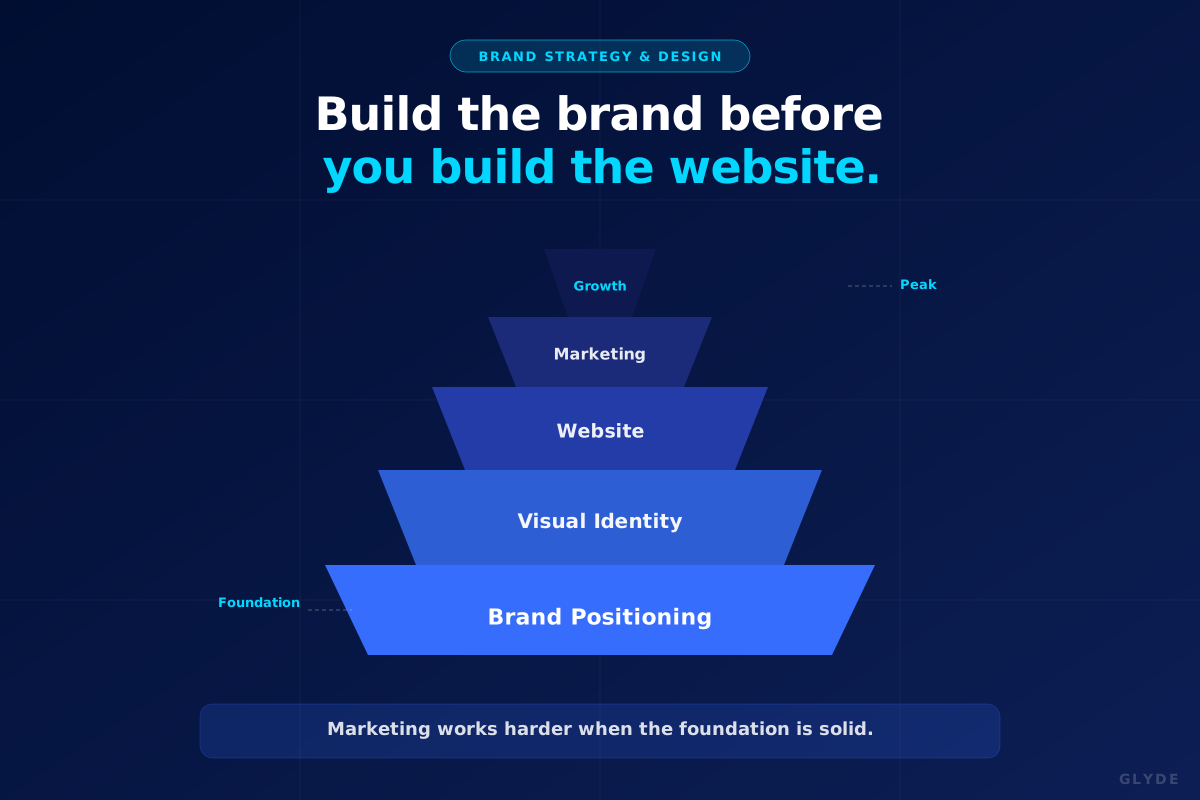
Once your positioning is established, every marketing channel becomes easier to execute — and more effective.
Website design
Clear positioning creates stronger messaging, clearer navigation, and higher conversion rates.
Content marketing
Content becomes focused around customer challenges and your area of genuine expertise.
SEO
Keyword targeting becomes more strategic and aligned with real business goals.
Paid advertising
Campaigns communicate a stronger value proposition and improve performance across platforms.
Positioning isn't just a branding exercise. It's a growth strategy.
Before you invest
A quick positioning checklist
Before investing in branding, a new website, SEO, or advertising, ask yourself these five questions:
- Do we know exactly who we serve?
- Do we understand the real problem we solve?
- Can we clearly explain what makes us different?
- Do we have a written positioning statement?
- Is our positioning reflected consistently across website, social, and marketing materials?
If the answer is "no" to any of these, positioning should come before promotion.
The Glyde framework
Where positioning fits in our process
At Glyde, positioning is always step one. Every engagement we run follows the same deliberate sequence — strategy before execution, foundation before channels.
The Glyde Growth Framework
01
PositionBrand strategy02
DesignVisual identity03
BuildWebsite & assets04
MarketSEO · Ads · Social05
ScaleSustainable growthA strong brand is built through clarity
When customers immediately understand who you help, what you do, and why you're different, every marketing effort becomes more effective.
Before investing in a new website, social media strategy, SEO campaign, or advertising budget — define your positioning first. Everything else becomes easier when the foundation is clear.
Ready to define your positioning?
Glyde works with startups and growing businesses across SEA to build brands that are clear, consistent, and built to scale.
Let's talk →