 UI/UX Design
 Contact Us
The psychology behind high-converting digital experiences
Every high-converting screen is really a bet on what a stranger's brain will do in the next three seconds. Trust, friction and proof aren't soft concepts — they're measurable, and the businesses winning at conversion have simply gotten better at designing for them.
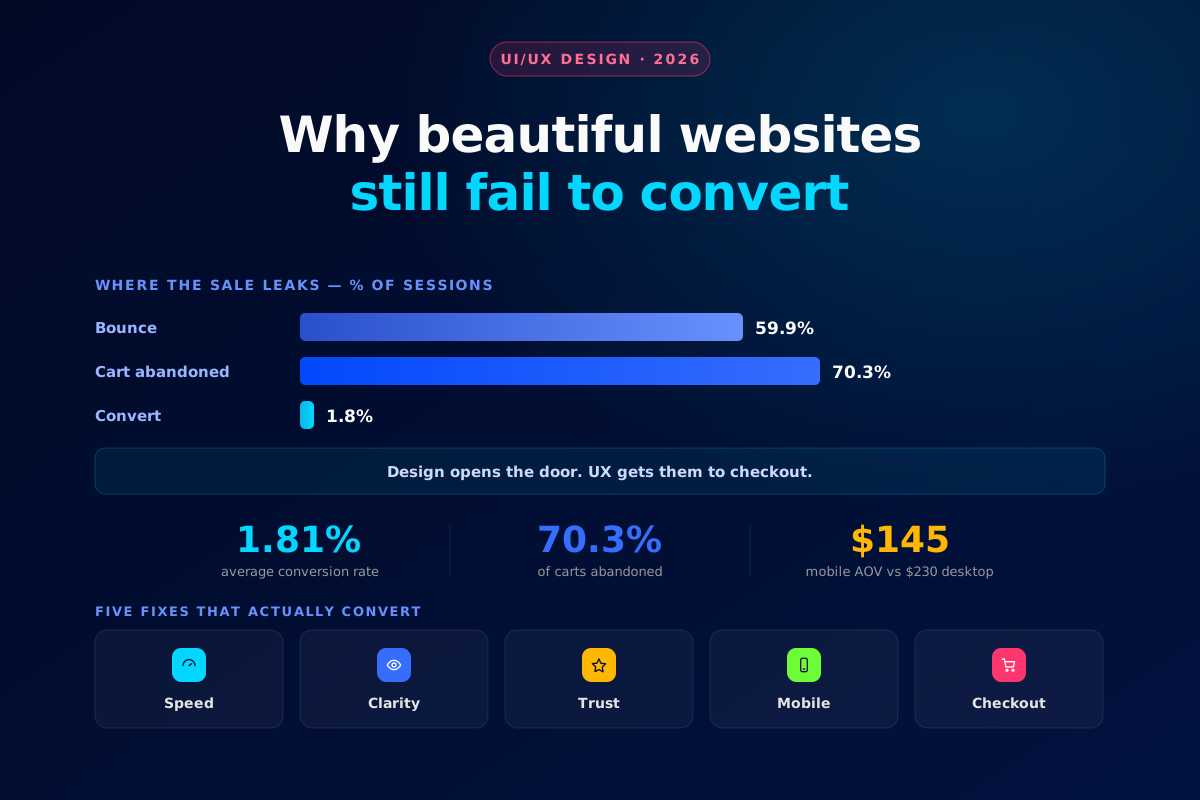
Most redesigns still start with aesthetics — a fresher layout, a bolder hero, a new colour palette — and stall on the same conversion rate. That's because buying decisions are made by the same brain that's been sizing up strangers and weighing risk for millennia, long before it ever saw a checkout button. Visitors don't read a page; they scan it for threat, effort and proof in a fraction of a second, and they decide whether to trust it before your value proposition has even finished loading. Understanding that decision — not just decorating around it — is what separates sites that convert from sites that merely look good.
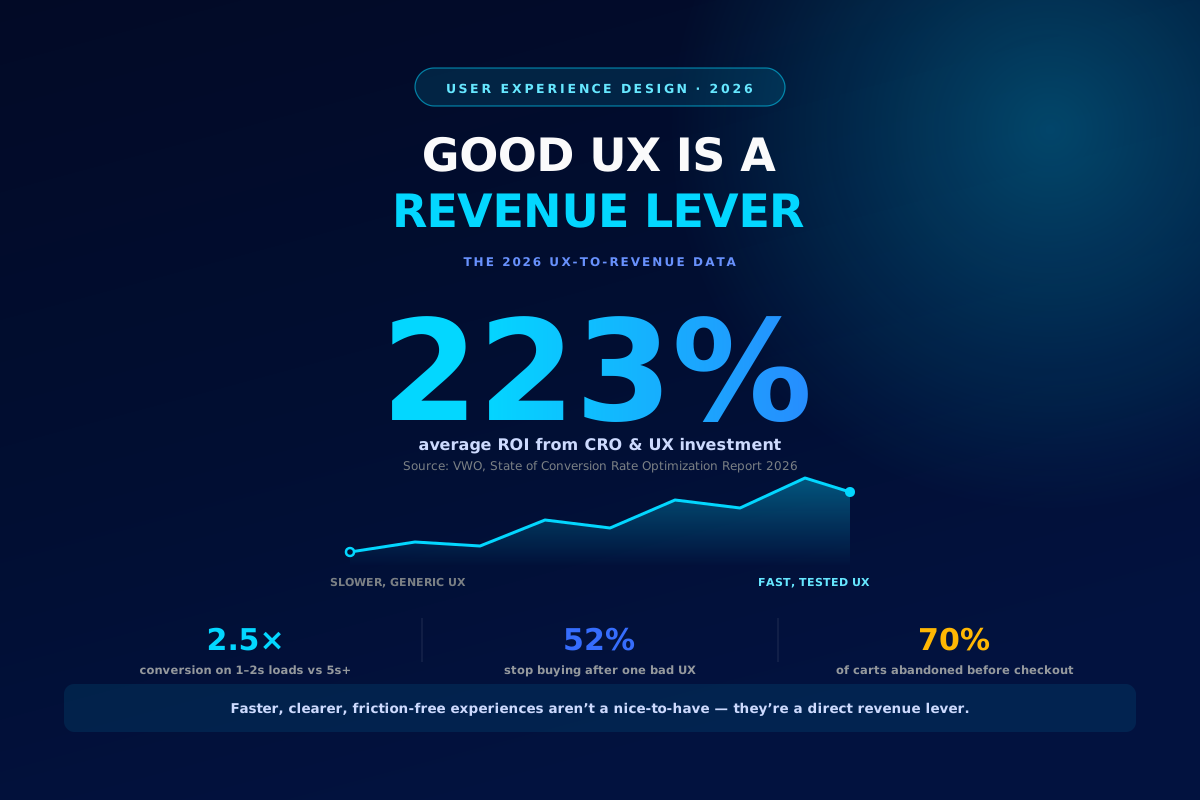
202%higher conversion from personalized CTAs vs. generic ones
270%more likely to buy with 5+ reviews vs. none
5xhigher B2B conversion at 1s load vs. 10s
Not every psychological lever moves the needle equally
Average conversion lift by tactic, 2026 research
The psychology
Five principles behind every high-converting screen
None of these are tricks — they're how people already make decisions online. The work is designing your experience to work with that wiring instead of against it, and measuring whether each principle is actually moving your numbers.
01Trust & Social Proof
1
Reviews as a purchase trigger
Five or more reviews make a product roughly 270% more likely to be bought than one with none — proof outweighs persuasion.
Trustpilot
Yotpo
2
The near-perfect rating wins
Ratings around 4.75–4.99 stars out-convert a flat 5.0 — a perfect score reads as curated, not real, to skeptical buyers.
02Cognitive Load & Friction
3
Speed doubles as a trust signal
A one-second load beats a ten-second one by up to 5x in B2B conversion — slow feels unsafe before it feels annoying.
PageSpeed Insights
Cloudflare
4
Fewer choices, faster decisions
Every extra field, plan or menu item is a decision a visitor can opt out of. Simplify the path, not just the palette.
03Personalization & Motivation
5
Personalized calls-to-action
CTAs tailored to the visitor convert up to 202% better than generic ones — relevance reads as attention, and attention builds trust.
HubSpot
Klaviyo
6
Honest urgency, real-time proof
Live visitor counts and recent-activity alerts lift conversion 10–15% on average — but only when the data is real; fabricated urgency borrows against the same trust it's meant to build.
Fomo
ProveSource
Build it
Where to start
Your situationStart withWhy
High traffic, low conversion
Trust & speed audit
Distrust and friction cause most drop-off before persuasion gets a chance
Reviews exist but conversion lags
Surface proof near the CTA
A review nobody sees converts nobody — placement beats volume
Checkout abandonment climbing
Cut fields and choices
Every optional decision is an exit ramp
Plateaued after a redesign
A/B test one variable at a time
Psychology is directional, not universal — let your own users confirm it
Psychology in design isn't about manipulation — it's about removing the friction between what someone wants and the action that gets it to them. The best-converting experiences don't push harder; they get out of the way faster.
Where Glyde fits
We design for how people actually decide
Knowing the principles is easy; knowing which one is costing you the most conversions on your specific site takes testing, not guesswork. At Glyde, every website and landing page we build starts with the same question: what is the visitor's brain doing in the first three seconds, and what's standing between that instinct and the action we want? We wire in the trust signals, strip out the friction, and then test — so the psychology isn't a theory bolted onto the design, it is the design.
The Glyde Growth Framework
01
PositionBrand strategy02
DesignVisual identity03
BuildWebsite & assets04
MarketSEO · Ads · Social05
ScaleSustainable growthWant a conversion psychology audit?
Glyde reviews your site through the same lens your buyers do — trust, friction and proof — and shows you exactly where it's costing you.
Get a free audit →Sources & references